
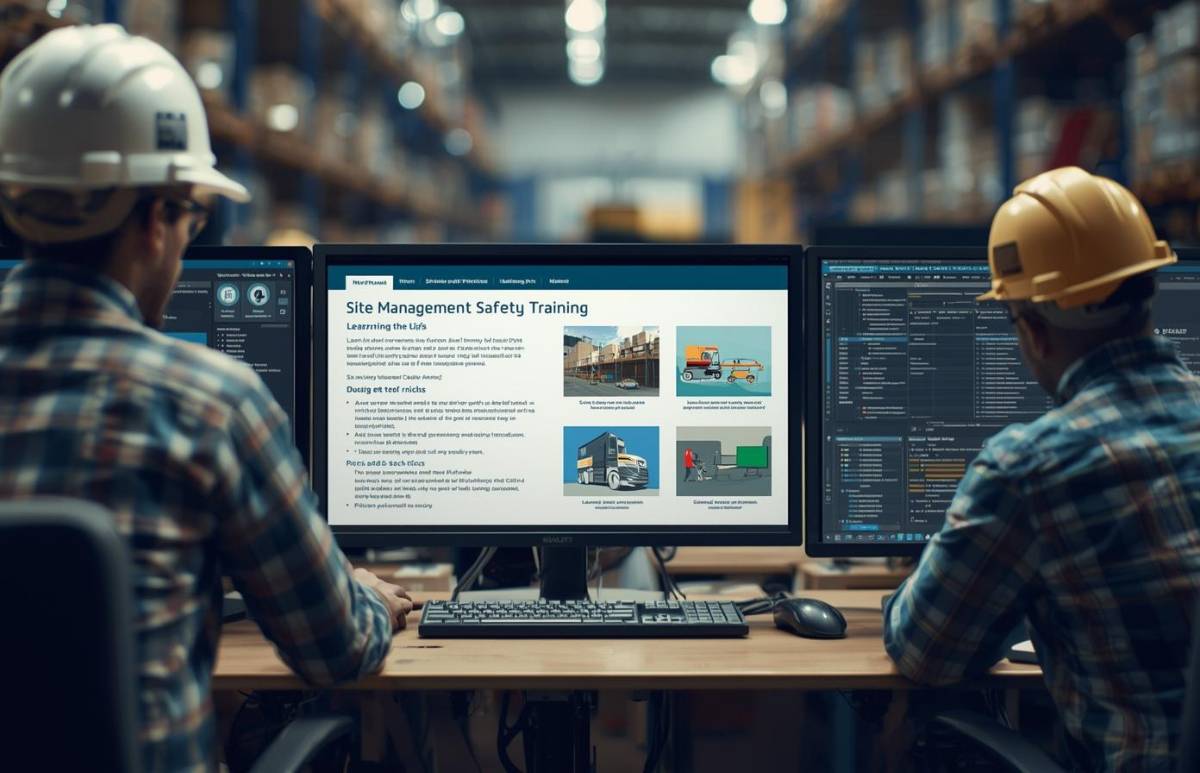
The shift towards digital learning in the construction industry
For years, the standard way to climb the ladder in construction management was to spend a full week tucked away in a cramped training centre, drinking lukewarm tea and staring at a whiteboard. While that traditional approach worked for some, the modern site manager rarely has the luxury of spending five consecutive days away from their project without things going slightly off the rails. That is why the rise of the SMSTS online course has been such a game-changer for the industry. It has taken one of the most rigorous and respected safety qualifications and made it accessible from the comfort of a home office or a quiet site cabin.
The Site Management Safety Training Scheme (SMSTS) is a cornerstone of the UK construction sector. It is often the bare minimum requirement for anyone looking to manage a site safely and legally. However, the move to a digital format is not just about convenience; it is about how we actually process information today. When you are in a familiar environment, you are often more relaxed and better able to take in the complex legal frameworks and safety protocols that the CITB requires you to master. It is a significant shift that reflects a more modern, flexible approach to professional development in a sector that is usually quite traditional.
Why remote learning works for busy construction professionals
One of the biggest hurdles for any site manager is the logistics of training. If you are based in a remote part of the country, finding a training centre nearby can be a nightmare. You end up factoring in travel time, hotel costs, and the general stress of being away from your family. An SMSTS online course removes those barriers entirely. As long as you have a stable internet connection and a laptop with a camera, you are good to go. This flexibility has opened up the qualification to a much wider range of people who might have previously put off their training due to the sheer hassle of the commute.
There are several practical reasons why the online format is gaining so much traction:
- Cost-effectiveness: You save money on petrol, parking, and public transport, not to mention the potential cost of overnight stays.
- Comfortable environment: You can set up your workspace exactly how you like it, which often leads to better focus and less fatigue over the five-day duration.
- Digital resources: Most online courses provide immediate access to digital manuals and search tools, making it easier to reference specific legislation during the learning process.
- Safety: Especially in recent years, the ability to train without being in a crowded room has become a preferred option for many health-conscious professionals.

What to expect during your SMSTS online course
A common misconception is that an online version of the course is somehow “easier” or less intensive than the classroom equivalent. In reality, the standards are exactly the same. The course is still delivered by a live tutor via platforms like Zoom or Microsoft Teams. You are expected to be present, engaged, and on camera for the duration of the sessions. The CITB maintains very strict rules to ensure the integrity of the qualification, so you can expect the same level of scrutiny you would get in person.
The structure typically follows a five-day block or a one-day-a-week format over five weeks. During these sessions, you will participate in group discussions, work through case studies, and complete various exercises designed to test your understanding of site safety. The interactive element is crucial; you aren’t just watching pre-recorded videos. You are talking to other managers, sharing experiences, and debating how to handle real-world hazards on a construction site.
Technical requirements you will need to sort out
Before you jump into an SMSTS online course, you need to make sure your tech is up to scratch. There is nothing more frustrating than your Wi-Fi dropping out right as the tutor is explaining the nuances of the Health and Safety at Work Act. Most providers will require you to have:
- A reliable laptop or desktop computer (tablets and phones are usually not recommended for the full five days).
- A functioning webcam and microphone, as participation is mandatory.
- A quiet, private space where you won’t be interrupted by site noise or family members.
- A stable internet connection with enough bandwidth to support video conferencing for several hours.
The core topics you will actually cover
The syllabus for the SMSTS is comprehensive, covering everything from the high-level legal responsibilities of a manager down to the specific risks associated with certain types of work. The goal is to give you a rounded understanding of how to manage a site in a way that keeps everyone safe while keeping the project on track. You will spend a lot of time looking at the Construction (Design and Management) Regulations, commonly known as CDM, which form the backbone of modern site management.
Other key areas of focus include:
- Risk Assessments and Method Statements (RAMS): Learning how to not just write them, but how to ensure they are actually followed on the ground.
- Scaffolding and Work at Height: Understanding the common pitfalls and the legal requirements for inspections and safety measures.
- Demolition and Confined Spaces: Managing high-risk activities that require specialised knowledge and permits.
- Occupational Health: Moving beyond physical accidents to look at long-term health risks like noise, dust (silica), and manual handling.
- Behavioural Safety: How to foster a culture where workers actually care about safety rather than just following rules to avoid trouble.

Making sure you pass the first time
The final hurdle of the SMSTS online course is the exam. This is usually conducted at the end of the fifth day using a secure online platform. It consists of multiple-choice questions and a few short-answer questions that require a bit more detail. Because it is an open-book exam (using the GE700 publication), the challenge isn’t necessarily memorising every single law, but knowing where to find the information and how to apply it to a specific scenario.
To ensure success, it is vital to stay organised throughout the week. Take plenty of notes, highlight key sections in your digital or physical manuals, and don’t be afraid to ask the tutor to clarify points you find confusing. The tutors are usually seasoned industry professionals who have seen it all, and they are there to help you succeed. Engaging in the group projects is also a great way to cement your knowledge, as explaining a safety concept to a peer is often the best way to make sure you truly understand it yourself.
Once you have successfully navigated the five days and passed the exam, your certificate is valid for five years. It is a prestigious qualification that is recognised by major contractors and clients across the UK. Having it on your CV—and having the knowledge in your head—is what separates a site supervisor from a true site manager. The transition to the online format has simply made this essential career step more manageable for the modern workforce, allowing you to balance your professional growth with the heavy demands of the job site.

Fern is a technology analyst and writer who explores emerging trends in AI, automation, and the future of smart devices.